Build your empire from the ground up
Sid Meier's Civilization VII is the latest installment in Firaxis Games' acclaimed strategy game series, setting a new benchmark for 4X games. This simulation game offers an immersive and complex gameplay experience with upgraded game mechanics that veterans of previous titles, such as Civilization V and Civilization IV, are familiar with.
Top Recommended Alternative
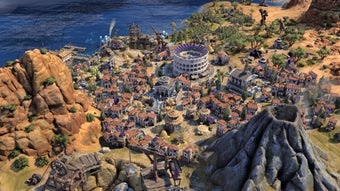
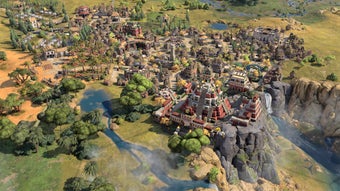
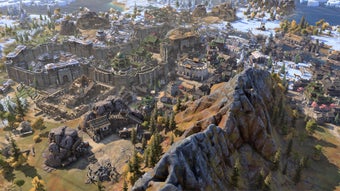
Sid Meier’s Civilization VII’s new structure is designed to keep the gameplay fresh and prevent the late-game "slog" that often plagues grand strategy titles. Visually, it’s a massive step forward, offering a lush, detailed map with navigable rivers and realistic urban settlements. It’s an ambitious reimagining that focuses on streamlined mechanics.
A grander experience
In Sid Meier's Civilization VII, players can lead one of many legendary leaders from history and put them into another era, each with unique abilities and bonuses that influence aspects of gameplay. The game provides a deep experience where every decision, from city planning to diplomatic relations, can significantly affect your empire's growth and prosperity — as it now climaxes with crisis events, which require you to adopt more policies.
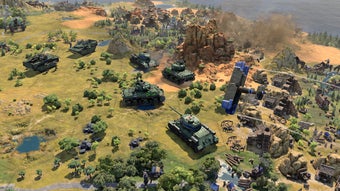
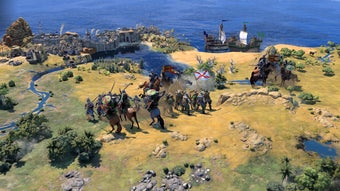
Other significant changes in this installment include the following: settlers now build towns instead of cities — and town productions are converted into gold, which players can use to purchase buildings and units. Towns can only turn into cities by spending more, which increases with the number of cities you already control. In addition, military units now build fortifications upon command. Only new Commander units earn XP and can be promoted.
Updates and changes in the game
However, the "Ages" system is a double-edged sword; many fans feel that switching civilizations mid-game breaks the immersion and erases the feeling of building a singular, lasting legacy. The late game can feel sterile and rushed due to the removal of classic features like nuclear deterrence and a free-form sandbox mode. Additionally, the user interface is surprisingly bland and "corporate" compared to the vibrant, thematic menus found in previous entries.
Furthermore, some players have voiced frustration with a monetization model that leans heavily on small, cosmetic DLCs rather than the meaty expansions the series is known for. The AI can also become repetitive, spamming diplomatic "hindrances" that feel more like arbitrary punishment than a genuine strategic challenge. These balancing issues, combined with a lack of late-game escalation, make the experience feel somewhat constrained compared to the series' heights.
Important highlights during its release
On the other hand, shortly after its release, Firaxis Games rolled out Patch 1.0.1, which addressed several issues. This update adjusted the user interface and refined tooltips to enhance gameplay. One of the notable points of discussion among players has been the absence of the Hot Seat multiplayer mode, a long-standing feature in the franchise since 2005 that allows multiple players to take turns on a single device. Responding to this, Firaxis confirmed that the feature will be reinstated in a future update.
In addition to updates for the main game, the game is also expanding into virtual reality. A dedicated VR version is set to launch. This adaptation will feature a board game-style presentation that can be projected into a player's real-world space using Quest's passthrough cameras or displayed in a virtual museum setting. Players can seamlessly switch between these modes, and the multiplayer experience will introduce digital representations of leaders sitting around a virtual table.
Moreover, several editions are available as well. The Standard Edition includes the base game, while the Deluxe Edition offers additional civilizations, leaders, and cosmetic enhancements. The Founders Edition builds on the Deluxe package with more in-game content and customizations. Meanwhile, the PC-exclusive Collector’s Edition includes all Founders Edition content and physical collectibles, such as a commemorative challenge coin, a figurine, and a decorative clock. However, the game is not without flaws. To play this game, you need a powerful operating system.
All about the Firaxis Feature Workshop
The Firaxis Feature Workshop is an innovative, community-driven initiative designed to gather early feedback on upcoming Civilization VII content. By inviting a select group of dedicated fans into a private, collaborative space, developers aim to refine new mechanics before they reach the general public. While initial sign-ups are currently closed, the team plans to expand the program to include more participants in the future.
The program focuses on testing significant overhauls to core systems, including Legacy Paths and Victory conditions. A major priority is developing an optional way for players to retain the same civilization throughout every Age, ensuring this playstyle remains fun and viable. Participants will use a private Discord to communicate directly with developers, helping to shape these features while maintaining the unique identity of the franchise.
Scheduled to begin in 2026, the workshop will primarily utilize the Steam platform for its initial rounds. Participants are expected to provide feedback through surveys, written reports, and Q&A sessions over roughly week-long testing periods. Even for those not selected, Firaxis remains committed to listening to broader community input and will publicly share the progress and learnings gained from these specialized testing sessions.
A riveting and immersive game
In conclusion, Sid Meier's Civilization VII presents an ambitious evolution of the franchise, introducing fresh mechanics and an enhanced visual experience. While it addresses some longstanding challenges, such as late-game stagnation, it faces criticism for its monetization model and interface design. With ongoing updates and community engagement through the Firaxis Feature Workshop, there's hope for improvements that could elevate the game’s overall impact and player satisfaction.